
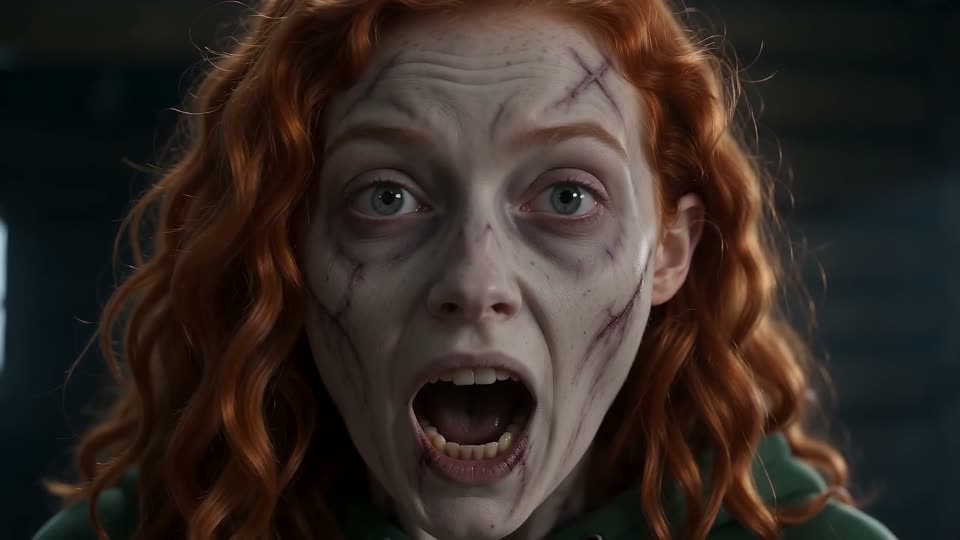
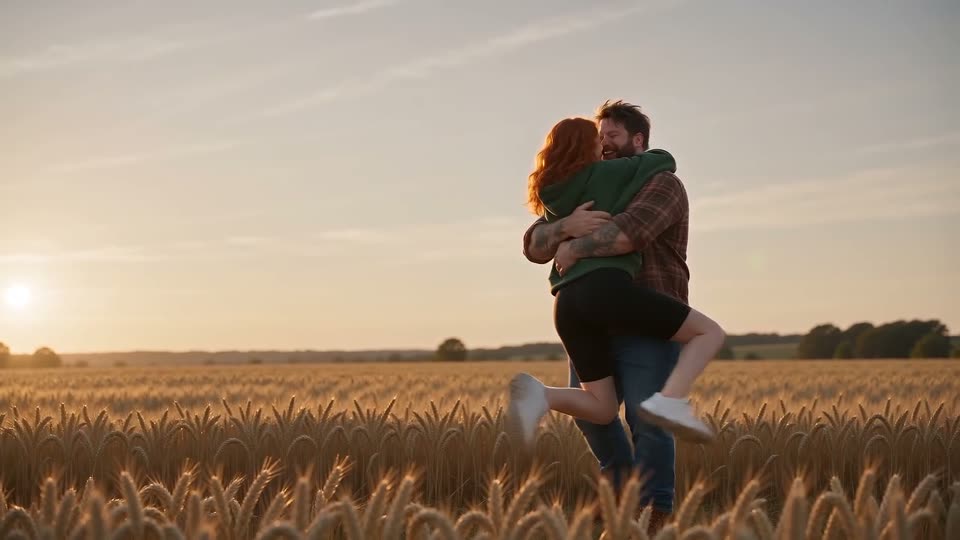
Our sample: a couple, made from two photos. The people are AI-generated.
The AI zombie video is a 15-second film made from two photos: one person has turned into a zombie, the other aims a gun at them in an old cabin, cannot fire, drops it and opens their arms. The zombie leaps, and mid-air the film cuts to a golden wheat field where the same leap lands as a hug, both of them alive. No blood, no gore — just grey skin, clouded eyes and torn clothes, and a cut that leaves you filling in the rest.
This guide walks through every step of making yours with RapVideo AI, which photos give the best results, what the seven shots actually look like, and why the story is fixed.
Where the trend started
Short AI zombie clips have been circulating since August 2026 — a man reaching for the woman he loves on a foggy street, a zombie dog finding its owner — but the version that spread was the cabin-and-gun take. It appeared on Instagram and X in late September 2026, just before Halloween, and within days it was everywhere: couples, parents with their grown-up kids, siblings, best friends.
The format works because the cut from the cabin to the wheat field never explains itself. Is the field a memory, a wish, or the last thing one of them sees? Everyone reads their own story into it, which is why the same fifteen seconds keep being remade with different faces.
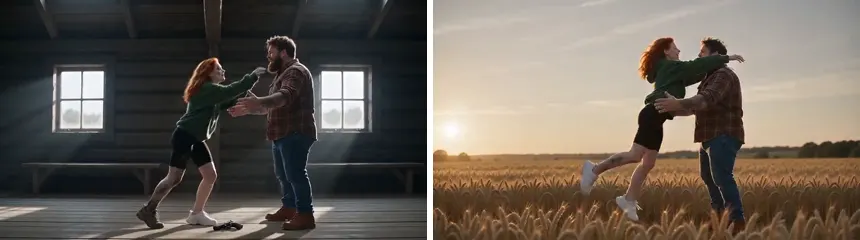
Half a second apart: the same leap, before and after the cut.
What happens in the seven shots
Every video follows the same arc, timed to a piano score:
- The cabin (0–3 s). A dim wooden room. Person 1 (the survivor) aims a handgun, crying. Person 2 (the one who turned) walks toward them.
- The face (3–4.5 s). Close-up of the zombie: grey skin, milky eyes, torn shirt — but clearly still the person from the photo.
- The hesitation (4.5–6 s). The survivor's hands shake. They lower the gun and let it fall.
- Arms open (6–7.5 s). The survivor steps forward, arms wide, tears still falling.
- The leap (7.5–9 s). A wide shot: the one who turned runs and jumps, caught mid-air.
- The cut (9 s). Same framing, same mid-air pose, but the cabin is gone. Now it is a wheat field at golden hour, and both people look healthy.
- The hug (9–15 s). The leap lands as an embrace. The camera orbits slowly. The score swells and fades.
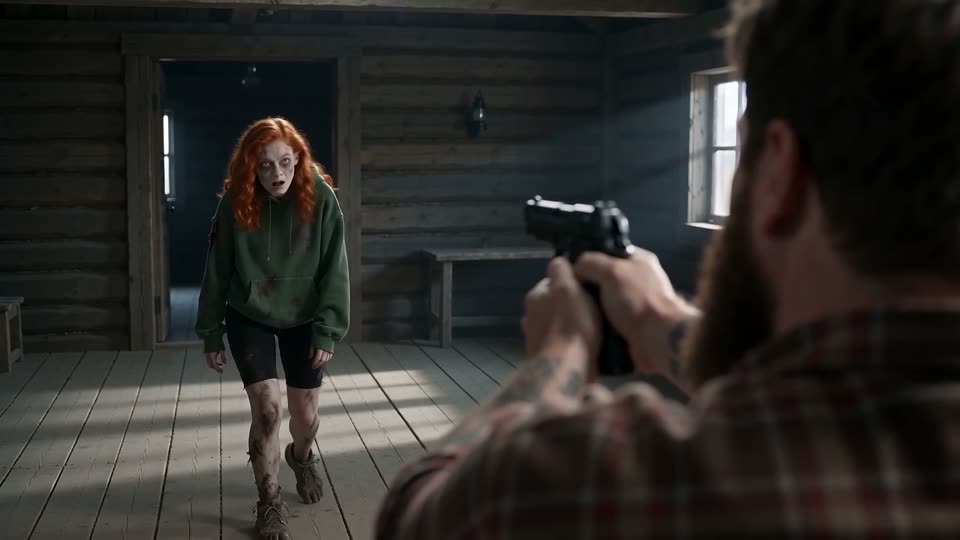
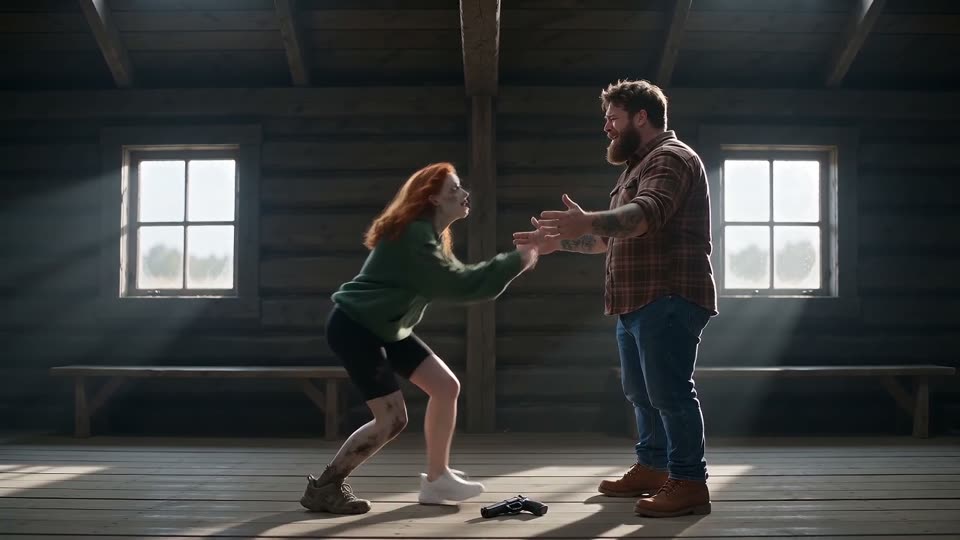
Four of the seven shots, from our sample.
The gun is never fired. There is no blood, no wound, and no child in the scene — the film is built for two adults.
How to make yours, step by step
You need two photos and a browser. No app, no video editor, no prompt.
- Open AI Zombie Video Generator. The zombie story effect is already selected. If you are making this specifically for you and your partner, the Zombie Couple Video page has the same effect with couple-focused copy.
- Add photo 1 — the survivor. This person holds the gun, cries and opens their arms. Give this slot a clear, front-facing photo.
- Add photo 2 — the one who turns. They get the zombie close-up and the leap, so pick your sharpest photo: the AI builds grey skin and clouded eyes on top of this face.
- Pick a ratio. 16:9 (landscape) looks most like a film; 9:16 (vertical) is ready for TikTok and Reels.
- Tap Make the effect. The render takes a few minutes. You get a downloadable MP4 with the piano score baked in.
It costs 10 credits at 720p or 7 at 480p. One $9.99 Single pack is exactly 10 credits, and a failed render is never charged.
Photos that make or break the result
The zombie effect transforms person 2's face in almost every shot, so the source photo matters more than usual.
- Front-facing, from the chest up. Both faces carry through all seven shots. A turned head or a full-body photo from across the room loses detail.
- Even, natural light. The cabin is dim, so a photo taken in harsh sun or a dark room makes the face swap harder.
- No sunglasses, masks or heavy beauty filters. Anything that hides the face forces the AI to guess.
- Two different people. Two photos of the same person come back as twins in the cabin.
- Only people who agreed to be in it. The video has a gun in it, so use your own photos and leave children out. Anyone under 18 needs a parent's consent.
If a face comes out blurry or mismatched, the fix is almost always a better photo, not a retry with the same one.
Why the story is fixed
The cabin-and-gun video is a fixed-story effect, not a general prompt tool. The seven shots, their timing and the score are set in advance, and the AI builds them around your two faces in one render. That is the whole point: you do not write a prompt, design the shots, cut the clips or retry individual scenes, and what comes out is the version of the story people already recognise from their feed, with the two of you in it. Upload two photos, choose the format, and it is done in a few minutes.
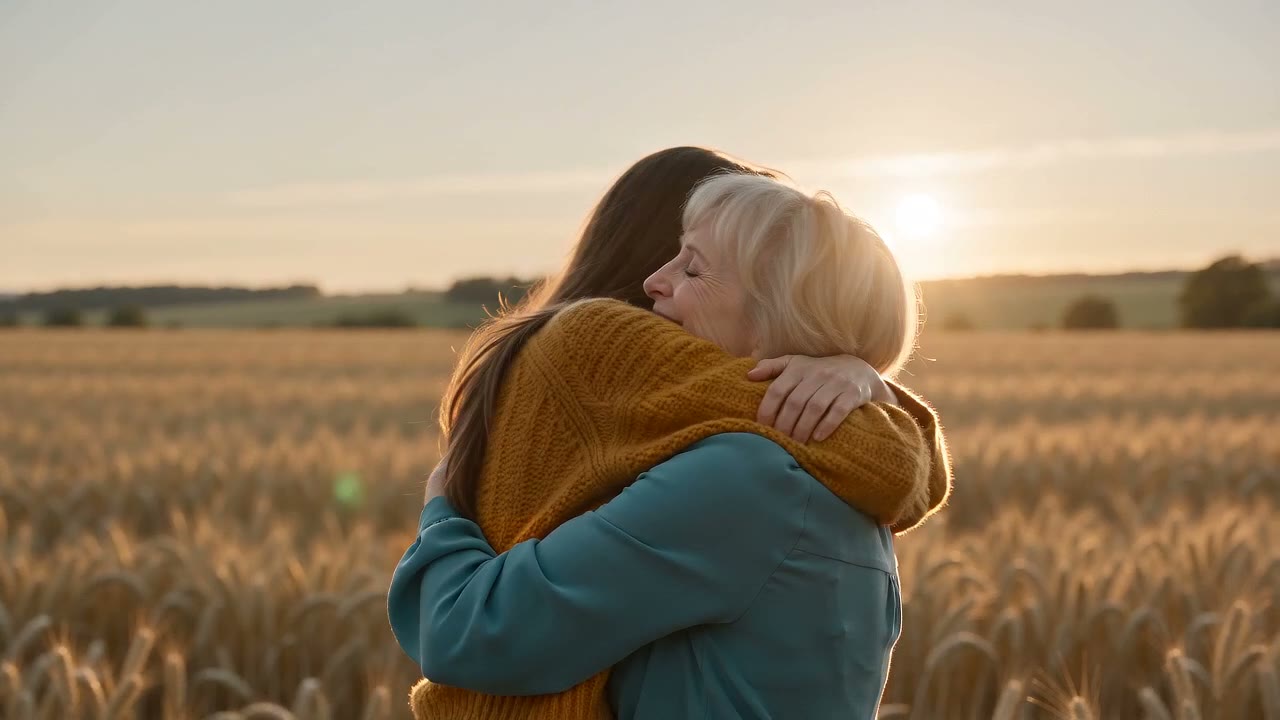
Another pairing: a mother and daughter
Same effect, same two-photo setup, different story: a mother who cannot shoot her grown-up daughter. It plays muted while on screen; tap it for sound.
Who it works for
The trend started with couples, and that is still the most popular pairing: boyfriend and girlfriend, husband and wife, same-sex partners. The Zombie Couple Video page is a shortcut if that is what you are here for.
But the same generator handles every two-adult pairing. Parents with a grown-up child, siblings, best friends — the film hits differently depending on who is in it, which is part of why it keeps going. Pets are not supported yet.
After the zombie video
If the zombie film is your first AI video from photos, the same studio makes the other trends of the season: Raindance AI for the pier scene from Dave and Tems, Hotel Lobby AI for the orange-booth rap, and Burning Bridges AI for the Drake party clip.
RapVideo AI is an independent tool, not affiliated with any of the creators whose trends it recreates.